
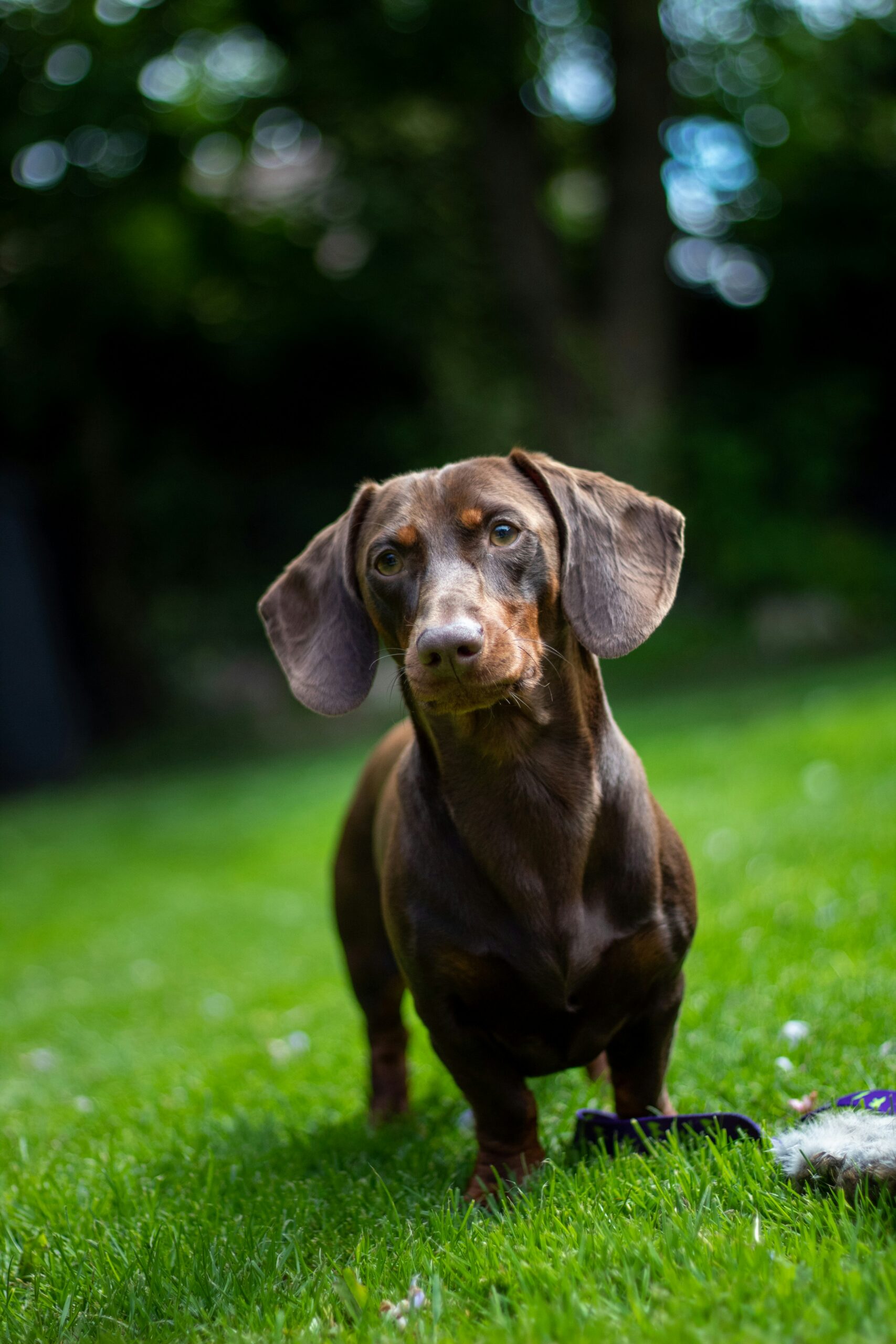
Dachshund Breed Guide: Personality, Care & Health Facts
1. Dachshund Breed Overview
Where Did Dachshunds Come From?
Dachshunds originated in Germany and were developed to hunt badgers and other animals living in underground burrows.
Their unusual body shape was actually a working advantage. Their short legs allowed them to enter tunnels, while their long, compact bodies helped them move through confined spaces.
The name Dachshund comes from German words meaning “badger hound.”
The American Kennel Club describes the breed as clever, lively, courageous, and persistent, characteristics that reflect its original hunting purpose.
This history explains something that new owners sometimes underestimate: a Dachshund may be small, but it does not necessarily think of itself as a small dog.
Size
Dachshunds come in:
- Standard
- Miniature
They also have three coat varieties:
- Smooth-haired
- Long-haired
- Wire-haired
VCA lists the breed at roughly 8–9 inches in height, with weight varying according to size type.
How Long Do Dachshunds Live?
A typical Dachshund lifespan is around 12–16 years.
That is worth considering before getting one. A Dachshund is not a short-term commitment—it can potentially be part of your household for well over a decade.
2. Dachshund Personality: What Are They Really Like?
Dachshunds are generally:
- Affectionate
- Intelligent
- Curious
- Playful
- Alert
- Courageous
- Independent
- Sometimes stubborn
The last two characteristics deserve special attention.
They Can Be Very Determined
Dachshunds were bred to work independently underground, so they were not developed simply to wait for their owner’s instructions.
That instinct can still appear in everyday life.
For example, a Dachshund may become extremely interested in a smell in the yard and completely ignore you for a moment. It may also decide that digging, barking, or investigating something is more important than whatever you wanted it to do.
This doesn’t mean Dachshunds are unintelligent. In fact, the AKC describes them as fast learners and recommends short, positive training sessions.
The challenge is often motivation rather than intelligence.
Positive reinforcement tends to work particularly well.
Are Dachshunds Good Family Dogs?
They can be excellent family companions when properly socialized.
They often form strong bonds with their owners and enjoy being involved in family activities. The AKC notes that Dachshunds generally want to be part of what their family is doing rather than being kept as outdoor dogs.
However, families with very young children should be cautious.
Because of their small size and long backs, Dachshunds should be handled gently. Children should learn not to pick them up carelessly, squeeze them, or encourage rough play.
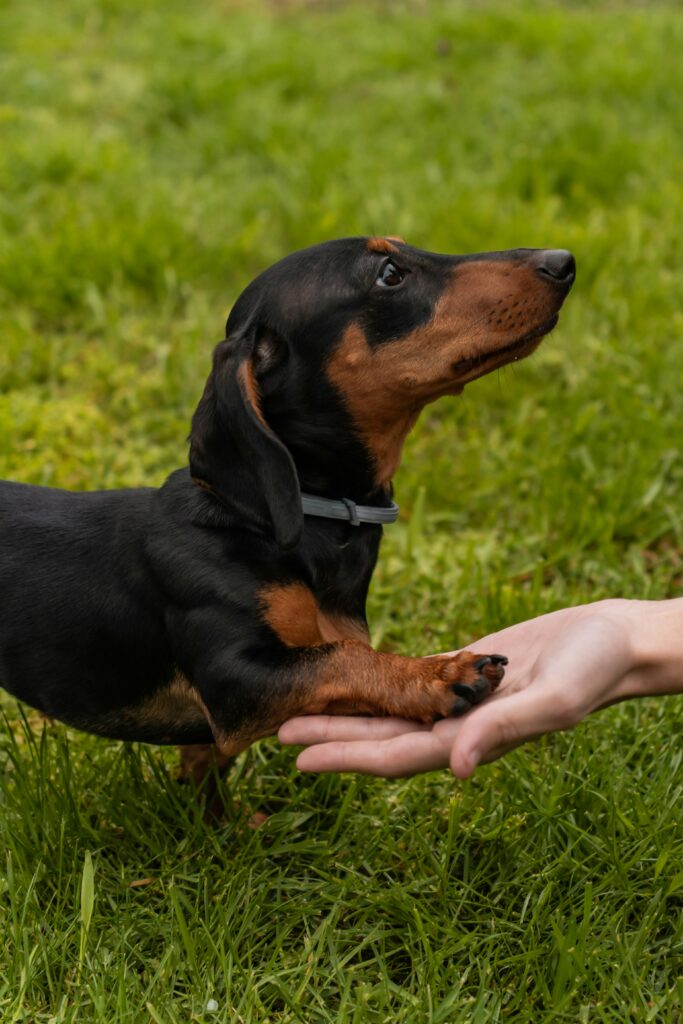
3. Daily Dachshund Care
Exercise: More Than You Might Expect
A common mistake is assuming that a small dog automatically needs very little exercise.
Dachshunds have moderate energy levels, and regular walking is important for maintaining fitness and preventing obesity.
Daily activities can include:
- Short walks
- Play sessions
- Scent games
- Basic obedience training
- Supervised outdoor exploration
Mental stimulation is particularly useful because this is a hunting breed with a strong nose and natural curiosity.
Protect Their Backs While Exercising
Exercise is good for Dachshunds, but high-impact activities are a different story.
The AKC specifically recommends preventing Dachshunds from repeatedly jumping off furniture because of their susceptibility to intervertebral disc disease (IVDD).
So instead of thinking:
“My Dachshund needs to avoid exercise.”
A better approach is:
“My Dachshund needs regular, controlled exercise without unnecessary impact on its spine.”
Diet and Weight Management
One of the most important aspects of Dachshund care is maintaining a healthy weight.
An overweight Dachshund carries additional stress on its already distinctive spinal structure. The AKC specifically warns owners about overfeeding and excessive treats, while noting that obesity can contribute to back and joint problems.
A practical rule is simple:
Measure food rather than feeding based on how hungry your Dachshund appears to be.
And be careful with treats. Those big eyes can make saying “no” surprisingly difficult.
Grooming
Dachshunds come in three coat types, and grooming requirements vary.
Smooth-Haired Dachshund — Usually the easiest to maintain. Regular brushing—approximately once a week—is generally enough for basic coat maintenance.
Long-Haired Dachshund — Needs more frequent brushing to prevent tangles, particularly around the ears, chest, legs, and tail.
Wire-Haired Dachshund — Usually requires more involved coat maintenance than the smooth variety and may benefit from periodic professional grooming.
In addition to brushing, owners should pay attention to:
- Nail trimming
- Ear cleaning
- Dental care
- Skin condition
The AKC also recommends maintaining regular dental care and grooming routines.

4. Common Dachshund Health Problems
If you’re considering buying or adopting a Dachshund, spinal health should be one of the first things you research.
Intervertebral Disc Disease (IVDD)
IVDD is the health problem most closely associated with the Dachshund’s distinctive body structure.
VCA notes that Dachshunds have a high incidence of intervertebral disc disease compared with many other breeds.
The problem occurs when a disc between the vertebrae degenerates or ruptures and puts pressure on the spinal cord.
Symptoms can include:
- Back or neck pain
- Reluctance to move
- Difficulty walking
- Weakness
- Unsteady movement
- Paralysis in severe cases
VCA notes that disc rupture can sometimes occur after what appears to be a relatively minor event, such as a small jump or fall, although the underlying problem may be chronic disc degeneration rather than the single event itself.
This is why prevention matters.
Practical Ways to Protect a Dachshund’s Back
- Maintaining a healthy body weight
- Avoiding repeated jumping from furniture
- Limiting high-impact activities
- Using ramps where appropriate
- Keeping the dog physically fit
- Paying attention to changes in movement
The goal isn’t to keep a Dachshund inactive. A fit Dachshund with controlled exercise is generally a better situation than an overweight Dachshund with very little activity.
Other Potential Health Issues
Dachshunds may also experience conditions including:
- Patellar luxation
- Obesity
- Eye disorders
- Bladder stones
- Legg-Calvé-Perthes disease
- Joint problems
VCA lists several of these conditions among health concerns associated with the breed. The Orthopedic Foundation for Animals and American College of Veterinary Ophthalmologists also document several inherited or breed-associated eye disorders in Dachshunds, including certain forms of progressive retinal atrophy.
This is another reason to choose a responsible breeder who performs appropriate health screening—or to work with a reputable rescue organization.
5. Who Should Own a Dachshund?

A Dachshund could be a great choice if you want a dog that is:
- Small but energetic
- Affectionate and people-oriented
- Funny and entertaining
- Intelligent and curious
- Suitable for apartment or house living
- Capable of enjoying moderate daily exercise
- Likely to remain a companion for many years
You may want to reconsider the breed if you are looking for a dog that is:
- Extremely easy to train
- Very quiet
- Happy with almost no exercise
- Comfortable being left alone for long periods
- Suitable for rough handling
The Best Dachshund Owner
The ideal owner isn’t necessarily someone with a huge house or a very active lifestyle.
It is someone who understands the breed’s particular combination of:
small size + big personality + strong hunting instincts + spinal vulnerability.
If you’re willing to provide consistent training, control their weight, give them appropriate exercise, and take their back health seriously, a Dachshund can be an exceptionally rewarding companion.
6. Dachshund FAQ
Are Dachshunds good for first-time dog owners? Yes, but with some reservations. They are affectionate and intelligent, but their independent nature can make training more challenging than their small size suggests.
Are Dachshunds good apartment dogs? Generally, yes. They adapt well to smaller homes as long as they receive sufficient exercise and mental stimulation. Excessive barking, however, can become an issue without appropriate training.
Do Dachshunds bark a lot? They can. Their history as hunting and alert dogs means they may be quite vocal when they notice unfamiliar people, animals, or sounds.
How much exercise does a Dachshund need? They have moderate energy levels and benefit from regular daily walks and play. The exact amount depends on age, health, and individual temperament.
Can Dachshunds climb stairs? They physically can, but owners should avoid unnecessary or repeated stair climbing when possible, particularly if there are safer alternatives.
Can Dachshunds jump on the couch? They can, but repeatedly jumping on and off furniture is best avoided because of their increased risk of spinal problems. A dog ramp can be a useful alternative.
Are Dachshunds good with children? They can be, particularly when properly socialized. However, young children should be supervised and taught how to handle a Dachshund gently.
Which Dachshund coat is easiest to maintain? Smooth-haired Dachshunds generally require the least grooming. Long-haired and wire-haired varieties require more coat maintenance.
How long do Dachshunds live? Most Dachshunds live approximately 12–16 years.
What is the biggest health concern for Dachshunds? Intervertebral disc disease (IVDD) is one of the most important health concerns associated with the breed. Maintaining a healthy weight and minimizing unnecessary spinal stress are important parts of responsible Dachshund care.
Final Thoughts
The Dachshund is a good example of why small dog does not necessarily mean easy dog.
They are compact, but they have the personality of a much larger working dog. Their intelligence, confidence, affection, and sense of humor can make them fantastic companions. At the same time, their stubborn streak, tendency to bark, and vulnerability to spinal problems require an owner who is willing to understand the breed rather than simply choose it because it looks cute.
If you want a small dog with a big personality and you’re prepared to take its back health seriously, the Dachshund may be an excellent match.